Name: Sophia Glaros
Hometown: Clarksville, MD
Undergrad: University of Maryland, College Park
What brought you to Georgetown?: Growing up in the greater Washington D.C. area, I always hoped to attend medical school where I could serve my home community while remaining close to my parents, brother, and grandma, who have been pivotal in shaping my values that guided my decision to pursue medicine. As I was choosing between medical schools, Georgetown stood out to me due to the commitment to cura personalis, social justice, and service-learning. I was also inspired by the welcoming environment and sense of community from the students. Furthermore, I was excited by the opportunity to engage in health policy at the Nation’s Capital through Medical-Legal Partnerships, volunteer with the HOYA Clinic, and contribute to impactful research, grounded in service to underserved communities.
What are your post-med school career or specialty goals?: For as long as I can remember, I have aspired to become a pediatrician. I deeply admire the unique role pediatricians play in caring for children and advocating for them and their families during some of life’s most pivotal moments. My passion for pediatrics has only grown through my clinical, volunteer, and research experiences, and was further reinforced by participating in the Bellringer Fellowship in childhood cancer survivorship. Each experience has revealed the profound impact that supportive, intentional relationships can have, and how much of a difference a physician can make by empowering children to reach their full potential.
While I remain uncertain about the exact specialty within pediatrics that I wish to pursue, this summer has made me particularly drawn to pediatric oncology due to the longitudinal relationship between the pediatrician and the entire family during and after treatment. I hope to build a career that combines clinical care with research and community engagement, enabling me to improve outcomes not only for the children I see in the clinic but also for the broader community.
What are you working on as a BellRinger Fellow this summer?: I am working with Dr. Nina Kadan-Lottick to investigate how to improve long-term health outcomes in childhood cancer survivors. While cure rates now exceed 86%, over 70% of survivors develop serious, chronic conditions as unintended consequences of their previous cancer therapy. This summer, I worked on the baseline analysis of the Bridging Information Divides and Gaps to Ensure Survivorship (BRIDGES) study, a study that directly compares two groups of diverse childhood cancer survivors from different locations to see if a specific follow-up care program improves their long-term health and recovery. Specifically, I looked at the starting information gathered from childhood cancer survivors and their caregivers 2 to 4 years after finishing treatment, checking how much they know about their follow-up care, how confident they feel managing it, and how actively involved they are in their own health. I contributed to this project through literature review, analyzing data, and manuscript preparation for publication in hopes of improving adherence to survivorship care.
Beyond my specific project, I got to learn about current research exploring how to make exercise a regular part of cancer recovery, including a unique program designed specifically to fit the culture and lifestyle of Latinx survivors. It has been a privilege to devote time to research, explore the breadth of clinical care advancements, and learn about survivorship care and the value of interdisciplinary collaboration.
Why are you passionate about cancer research?: I am passionate about cancer research because it is one of the clearest examples of how research can directly transform patients’ lives. Advances in treatment have dramatically improved survival rates for cancer, creating a growing population of survivors with unique long-term medical care needs. That shift has highlighted the importance of survivorship research in helping patients survive cancer but also helping them thrive and live fulfilling lives afterward.
Cancer research has also shown me the power of collaboration and the possibility of innovation through clinicians, researchers, patients, families, and advocates working together toward a common goal. The sense of community, combined with the resilience of patients and their families, continually inspires me and reinforces why I want to be a physician.
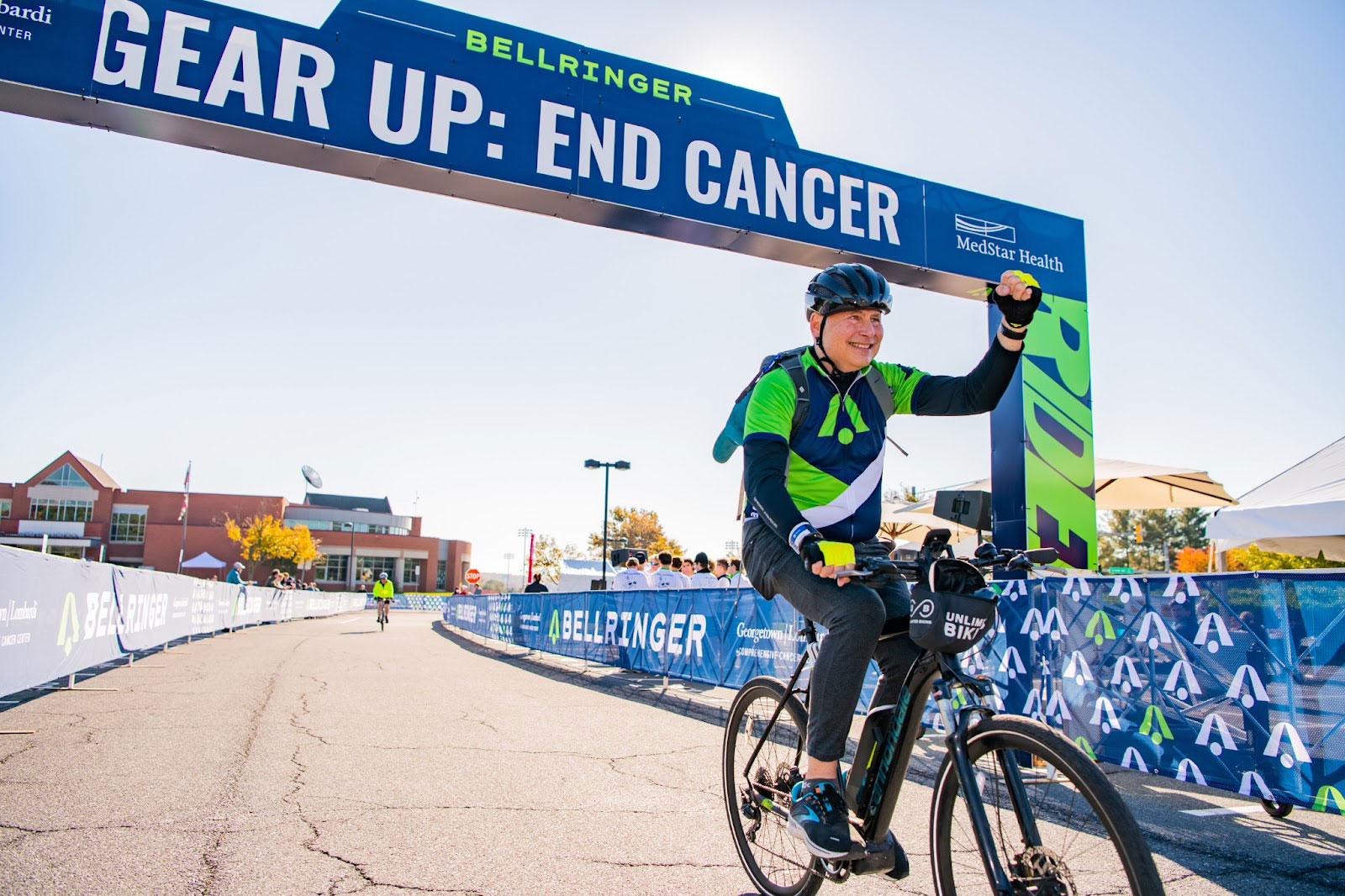
How do you plan to be involved in BellRinger this year?: I’ll be volunteering!
Anything else you’d like to share with the BellRinger community?: Although this will be my first time participating in BellRinger, I am excited to join the Georgetown community as a volunteer in support of cancer research. Through my BellRinger Fellowship, I have seen firsthand the importance of research, and I look forward to contributing in another meaningful way by helping raise funds and volunteering to support patients, families, researchers, clinicians, and fellow students who share the common goal of ending cancer.