BellRinger Fellow Catherine Van Dongen grew up just minutes from Georgetown University, but her path to medical school has taken her across the globe and through a diverse range of experiences. From studying abroad in Spain as a high school junior to majoring in both Biology and Hispanic Studies at William & Mary, Catherine has always sought to merge scientific inquiry with human connection. She’s the first in her family to pursue a career in medicine, though she jokes that engineering runs in her blood, just not quite in the way it does for her relatives.
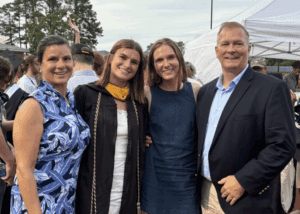 While her interest in medicine began in high school, it was a fascination with CRISPR, a gene editing technology, and the ethical questions it raised that first sparked her love of research. She explored different scientific fields, starting with ecology and public health, then pivoting toward clinical medicine through liver disease research during the COVID-19 pandemic. After graduating college, she joined the Whitehead Institute at MIT as a research technician, where she witnessed firsthand how research, biotech, and therapeutics come together to drive clinical innovation. That experience solidified her decision to pursue an MD/PhD—an opportunity to combine rigorous science with the relational, humanistic side of patient care.
Georgetown’s emphasis on cura personalis was a natural fit for Catherine’s goals. As a first-year medical student and Mitchell BellRinger Oncology Research Fellow, Catherine spent the summer in the lab of Dr. Joyce Slingerland, professor of oncology at Georgetown’s Lombardi Comprehensive Cancer Center, investigating the role of the protein p27 in breast cancer. Typically, p27 functions as a CDK inhibitor that regulates cell cycle progression. But in breast cancer, that role changes. Catherine’s project focused on how certain changes to p27, particularly a chemical change called phosphorylation, can activate new gene and protein expression patterns in breast cancer cells. For Catherine, returning to laboratory benchwork after time away was invigorating, especially knowing that her work was tied so closely to patient outcomes.
“This is the closest I’ve ever felt to research that’s directly connected to patients,” she reflected. “It’s helped me reframe how I think about research, not just as discovery, but as something deeply intertwined with patient care.”
The mentorship she received over the summer, particularly from Dr. Slingerland and PhD student Amir Bagheri, was another highlight. “Finding that kind of mentorship so early in the program has been incredible,” she said. “I’m just really grateful.”
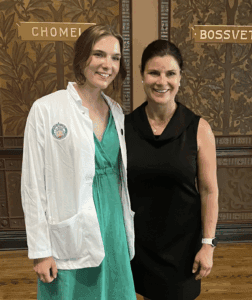
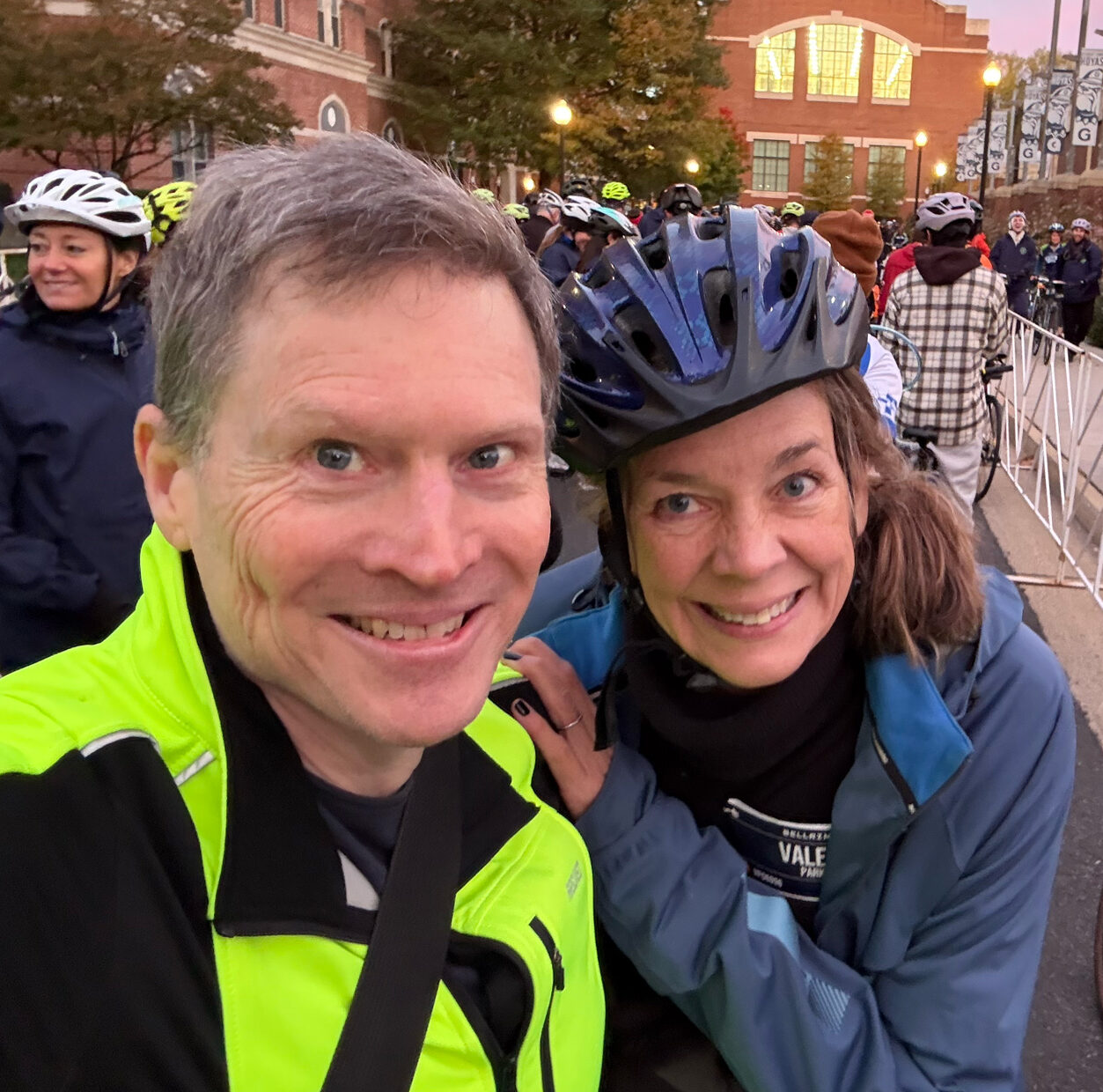
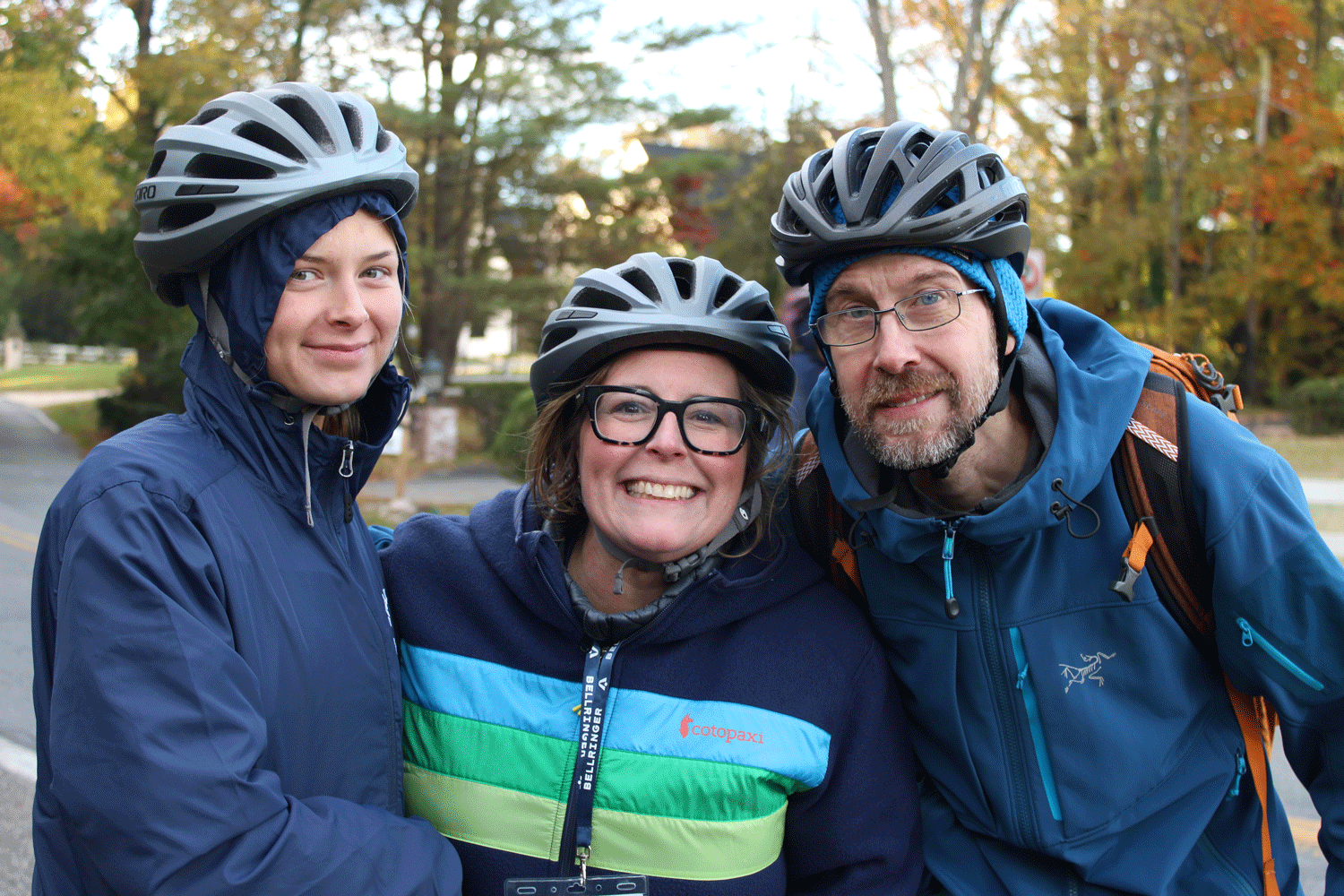
Catherine’s connection to BellRinger began well before her fellowship. She rode the 25-mile route last year as part of the MD/PhD team and immediately felt part of something bigger. “The energy, the community—it was all amazing,” she said. One moment stood out to her the most: the final stretch of the Ride, lined with quotes honoring loved ones impacted by cancer. “It completely hit home. I actually picked up biking after that ride and haven’t stopped since.”
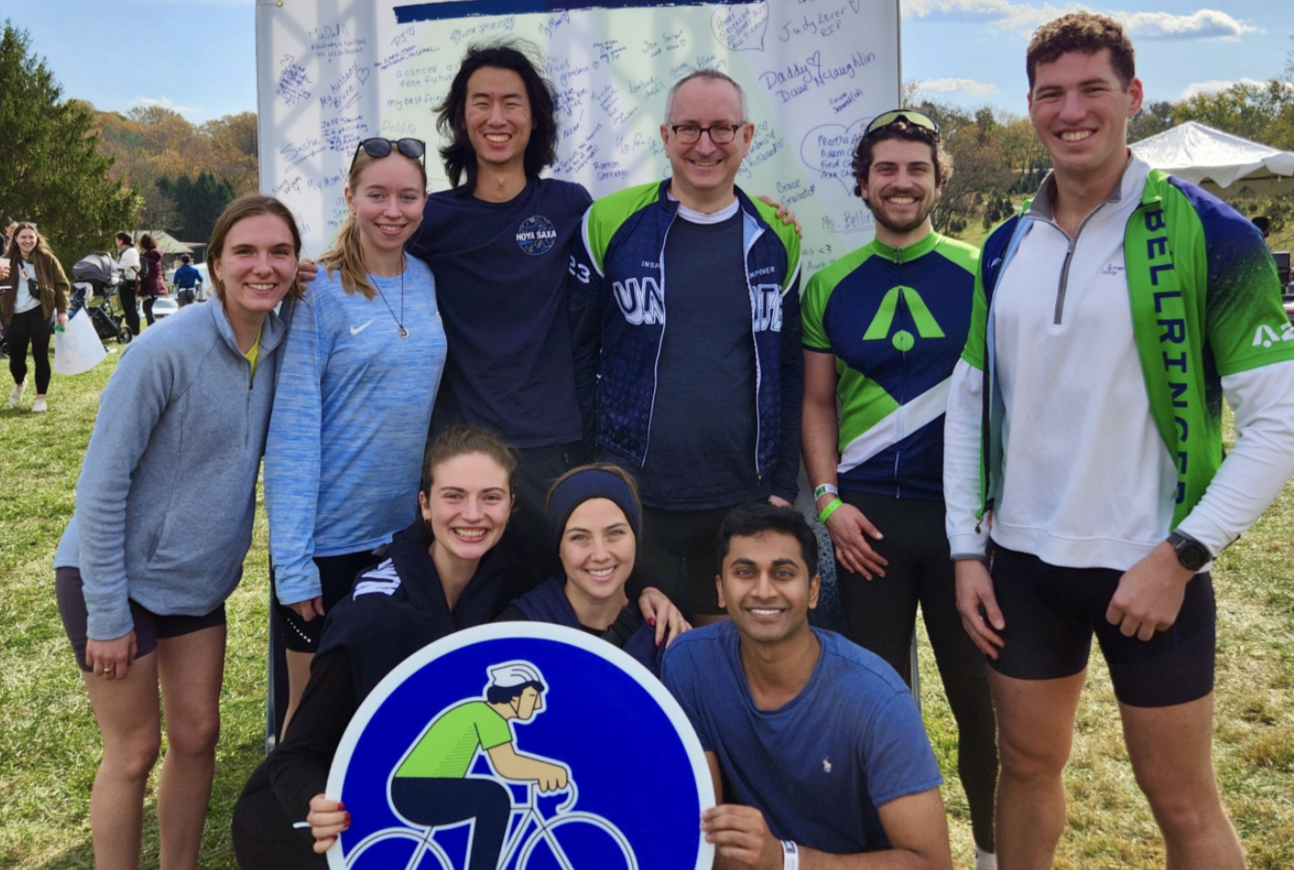
This year, she’s returning to ride for her second time in BellRinger. She’s been recruiting friends from medical school to ride with her and is excited to approach the ride with more confidence and clarity. “Last year, I didn’t know what to expect. This year, I’m going all in. I’ve been talking about BellRinger to everyone I know.”
For Catherine, BellRinger is more than just a ride. It’s a community united by purpose and a powerful reminder of why research and patient connection matters. “I’ve always wanted to bridge research and human connection. BellRinger makes that real.”
The Mitchell BellRinger Oncology Research Fellowship Program, named in honor of Georgetown University School of Medicine Dean Emeritus Stephen Ray Mitchell, MD, recognizes his extraordinary contributions to advancing medical student research during his tenure as Dean for Medical Education at Georgetown. Established in 2024 with support from the family of Elena and Barney Byrd, the program is now additionally funded by Dr. Mitchell and his wife, Ellen, after being deeply moved by the recognition. Through the BellRinger Fellowship program, Georgetown Lombardi will continue to drive cancer research forward and mentor the next generation of researchers.