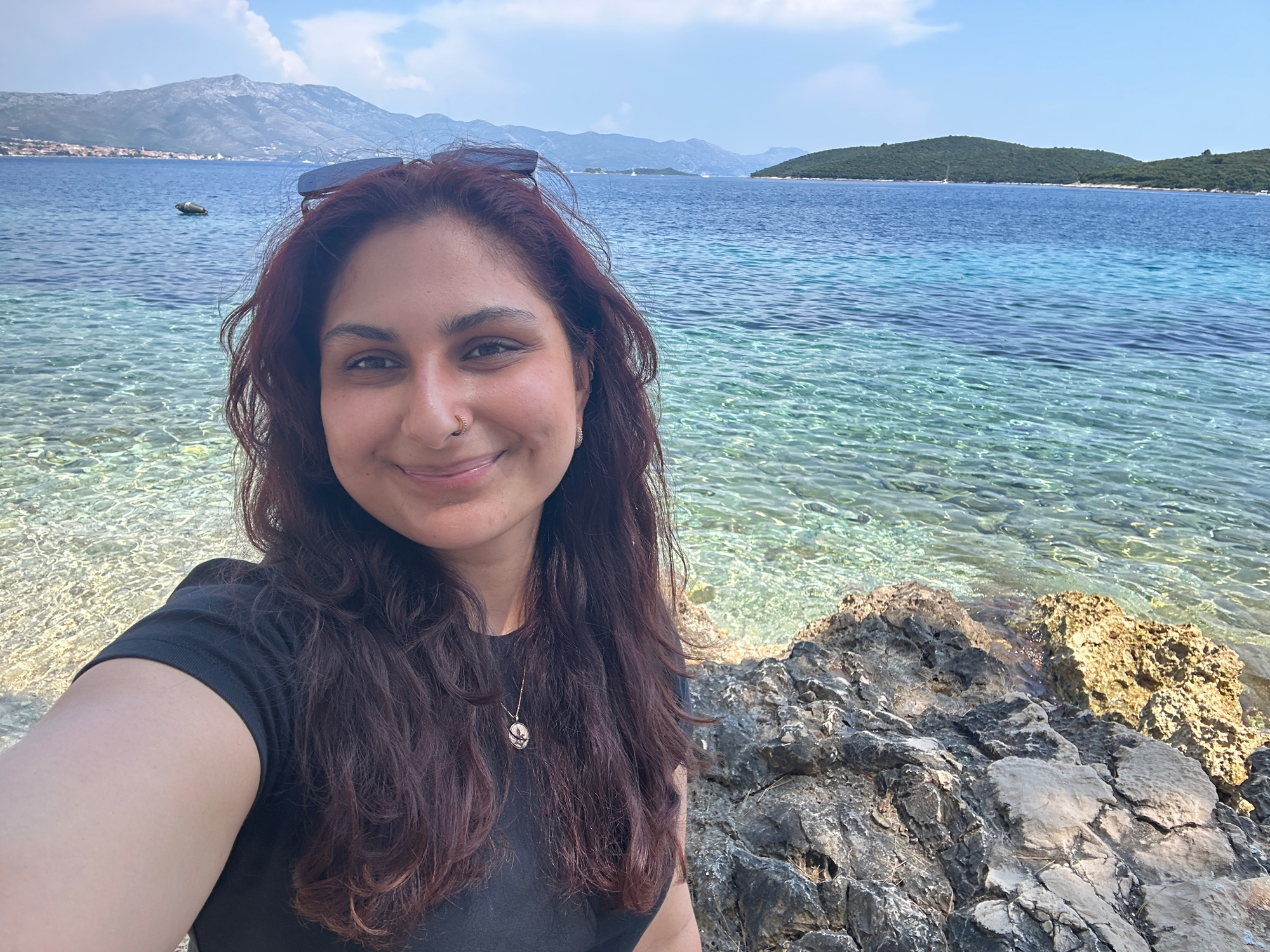
Growing up in suburban Arizona, BellRinger Fellow Maeen Arslan’s early years were shaped by a deep awareness of community needs and a desire to serve. The development of her neighborhood, transforming from an under-resourced area to one with greater healthcare access, inspired her to give back. In high school, she volunteered at food banks and helped package medical supplies for communities in need. She also spent time at a county hospital and burn center, gaining firsthand exposure to health disparities that sparked her enduring commitment to medicine.
Maeen’s academic journey brought her to Dartmouth College, where she pursued an education that bridged her interest in healthcare with environmental studies. Living in a state with scarce water resources, she became increasingly aware of how environmental inequality intersected with public health. Her undergraduate work culminated in a deeper exploration of climate change and global health, eventually steering her back toward medicine with a focus on health equity.
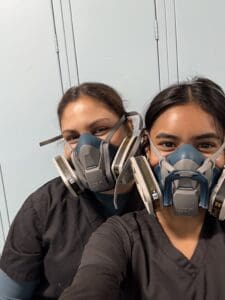 Following graduation, Maeen took a gap year to serve with the Indian Health Service (IHS), where she worked in an HIV specialty clinic. There, she explored colon cancer incidence rates through a primary care lens—an experience that solidified her commitment to addressing health disparities among underserved populations, particularly American Indian and Alaska Native communities. Whether volunteering at a free clinic on an alternative spring break or navigating language barriers in multilingual settings, Maeen consistently sought opportunities to build trust and dismantle systemic barriers to care.
Maeen’s dedication to equity in medicine led her to Georgetown University School of Medicine, drawn by its community engagement, robust public health initiatives, and diversity of clinical settings. The opportunity to rotate through hospitals that serve populations similar to those she encountered at the IHS felt like a natural continuation of her service-oriented path. Georgetown’s unique combination of a vibrant undergraduate community and an expansive hospital system offered the variety and mission-driven work she had been looking for.
This summer, Maeen served as a Mitchell BellRinger Oncology Research Fellow, diving into a project that intersects her personal and professional interests. Her research focused on disparities in oral cavity and pharynx cancers within the American Indian and Alaska Native populations as compared to the White population. Using the SEER database, she examined subtypes of these cancers—such as lip, tongue, and tonsil cancers—by analyzing survival curves and hazard ratios to identify differences in survival. While she acknowledges that coding and data analysis can be slow and meticulous, Maeen finds empowerment in the ability to draw meaningful insights from the numbers. Her mentor, Dr. Earl Harley Jr., a professor of otolaryngology and pediatrics at Georgetown School of Medicine, encouraged her to think critically about the biological and clinical nuances of the data, pushing her to consider why certain cancer subtypes may present greater disparities than others.
The project gave Maeen a new appreciation for the complexity of oncology research and its potential to inform real-world care. Even when the results of her analysis don’t reach statistical significance, she sees value in identifying trends that may have clinical implications. For Maeen, the work is not just academic, it’s personal. It reinforces her desire to become a physician who not only understands the data but advocates for those often left behind by it.
 While she hasn’t settled on a specific specialty, what matters most to Maeen is serving in a healthcare system that reaches diverse patient populations. Her primary goal is to be a trustworthy, compassionate physician, someone who recognizes the realities of medical mistrust and actively works to build confidence and connection with the people she serves. She’s committed to doing the personal and professional work required to understand her patients deeply, address their needs holistically, and never become another barrier in their care.
That same commitment to community is what drew her to BellRinger. She initially learned about it through her mentor and peers but wasn’t sure what it entailed. Once she understood that the movement went far beyond a bike ride, her excitement to be a part of BellRinger 2025 as a volunteer grew exponentially. For Maeen, BellRinger offers a powerful model of how institutions can give back to the communities they occupy. She sees it as Georgetown’s way of showing up, not just for its own people, but for the broader public impacted by cancer.
“I’m a firm believer that every institution has a responsibility to the community it’s in,” Maeen said. “BellRinger is one of the most meaningful ways I’ve seen that responsibility put into action.”
She also sees BellRinger as a platform for expanding awareness and engagement far beyond Washington, DC. Talking about her fellowship with friends and family in Arizona has opened new conversations about cancer research and fundraising. In that way, BellRinger’s impact transcends geographic boundaries—something Maeen believes is essential in the fight against cancer.
The Mitchell BellRinger Oncology Research Fellowship Program, named in honor of Georgetown University School of Medicine Dean Emeritus Stephen Ray Mitchell, MD, recognizes his extraordinary contributions to advancing medical student research during his tenure as Dean for Medical Education at Georgetown. Established in 2024 with support from the family of Elena and Barney Byrd, the program is now additionally funded by Dr. Mitchell and his wife, Ellen, after being deeply moved by the recognition. Through the BellRinger Fellowship program, Georgetown Lombardi will continue to drive cancer research forward and mentor the next generation of researchers.