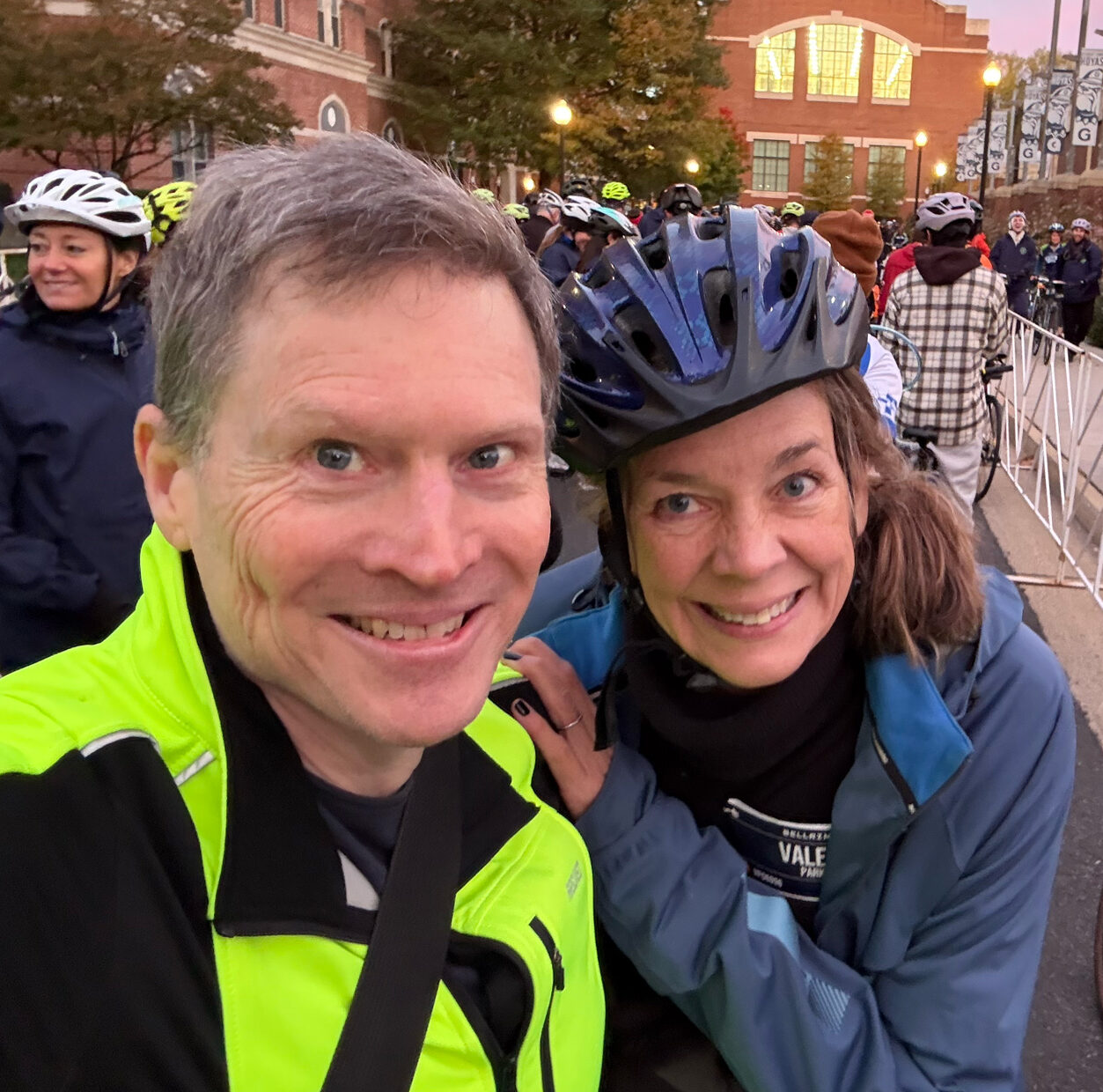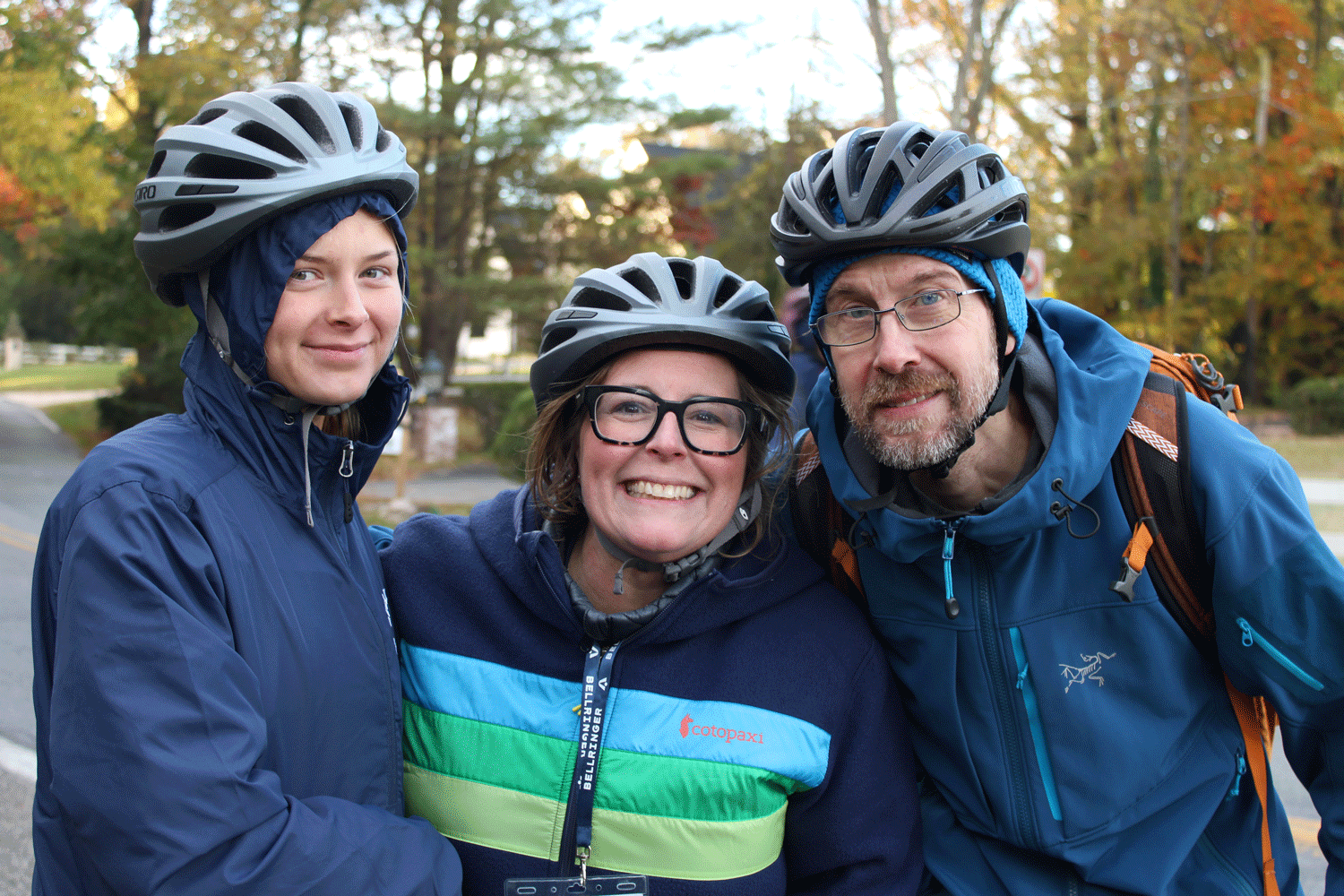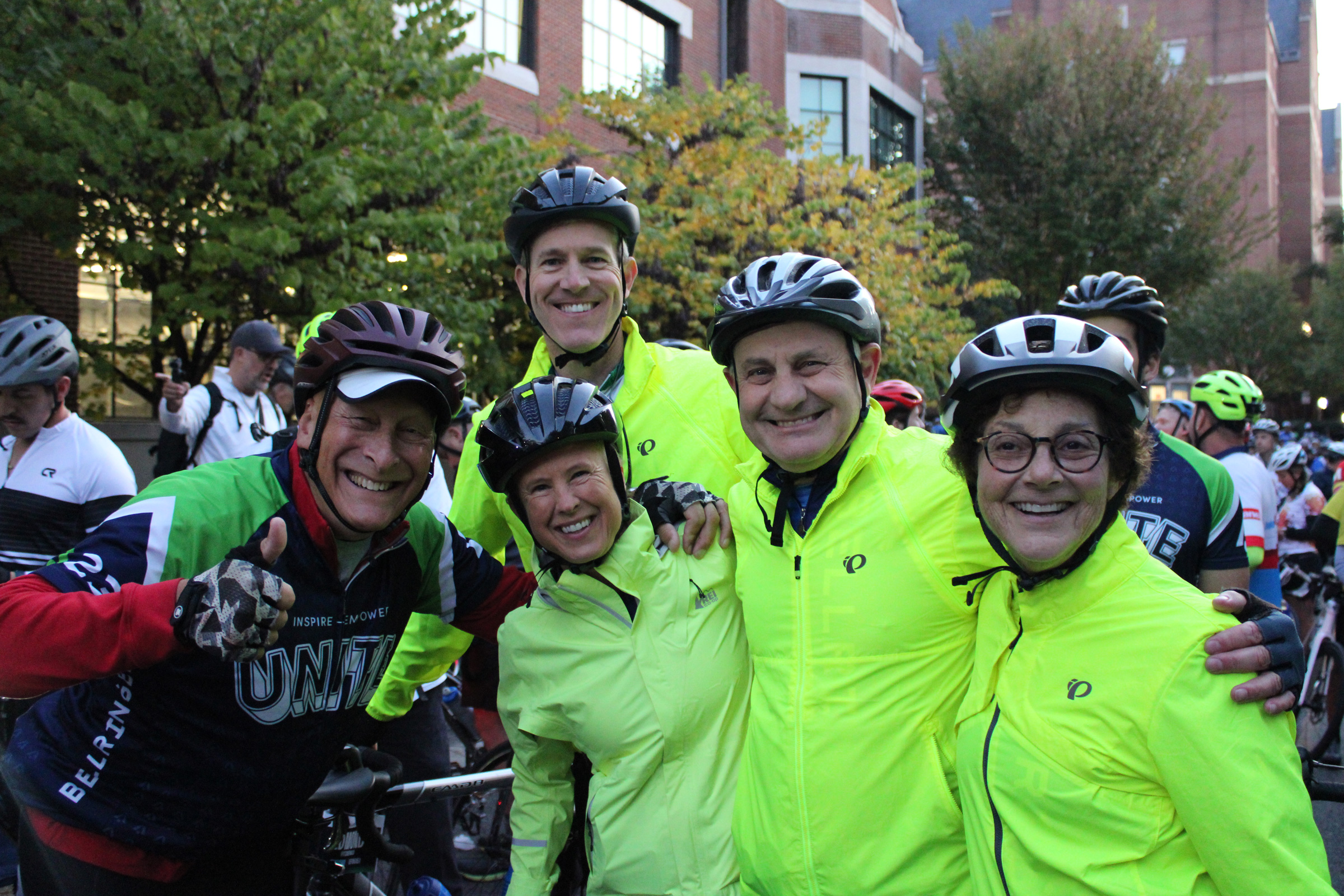
Dr. Atkins and members of Team Immunotherapy in BellRinger 2024
At first glance, a bike ride may seem like an unlikely symbol for decades of scientific progress. But for Dr. Michael B. Atkins, Deputy Director of Georgetown University’s Lombardi Comprehensive Cancer Center, BellRinger is not just a community fundraiser or an athletic feat—it’s the culmination of a life’s work. The proof that patients once tethered to hospital beds can not only survive, but thrive.
Dr. Atkins’ path to Georgetown was not a straight line, but a purpose-driven evolution marked by curiosity, courage, and a refusal to accept that “good enough” was ever enough. Educated in Boston, he spent the majority of his career immersed in the city’s storied academic medical environment. Trained at Tufts, he pursued college, medical school, residency, and his oncology fellowship all within its walls, initially drawn to cancer not simply for its scientific complexity, but for what it revealed about the human experience.
Cancer, he realized early, wasn’t just a disease—it was often the defining moment in a person’s life. And for the physician tasked with guiding them through it, that responsibility was both a privilege and a calling. Oncology offered him a unique confluence: the chance to apply cutting-edge science to one of medicine’s greatest challenges, while also forming deep, enduring relationships with patients that are rare in modern medicine.
From the start, his scientific interest in cell biology and immunology guided his focus. In the 1980s, long before immunotherapy became a cornerstone of cancer treatment, Dr. Atkins joined a small group of physicians exploring the potential of the immune system to fight disease. It was a high-risk, high-reward field. But Dr. Atkins remained and began working with a molecule called interleukin-2, one of the earliest forms of immunotherapy. At the time, only two cancers—melanoma and kidney cancer—showed any response to the treatment. Those modest results, however, were enough to justify building a research and clinical program around it. He immersed himself in the work, eventually leading trials funded by the National Cancer Institute even before completing his formal fellowship. Within a year, he was helping validate groundbreaking studies, making monthly trips to the NIH and collaborating with a national network of early immunotherapy pioneers.
For two decades, he helped lead that first wave of immune-based treatment. It was slow, deliberate progress. While interleukin-2 offered long-term survival for a small subset of patients, most still faced limited options. As science advanced, Dr. Atkins and his colleagues began to understand the barriers that held the immune system back—particularly the inhibitory pathways known as immune checkpoints. When researchers identified molecules like PD-1 and CTLA-4 as culprits, the field changed almost overnight.
Dr. Atkins was ready. Because he had stayed the course during immunotherapy’s lean years, he was uniquely positioned to lead when the second wave of discovery hit. New therapies targeting these checkpoints transformed cancer care, not only for melanoma and kidney cancer, but for more than 20 different tumor types. For the first time, durable remission felt within reach for patients who once had little hope.
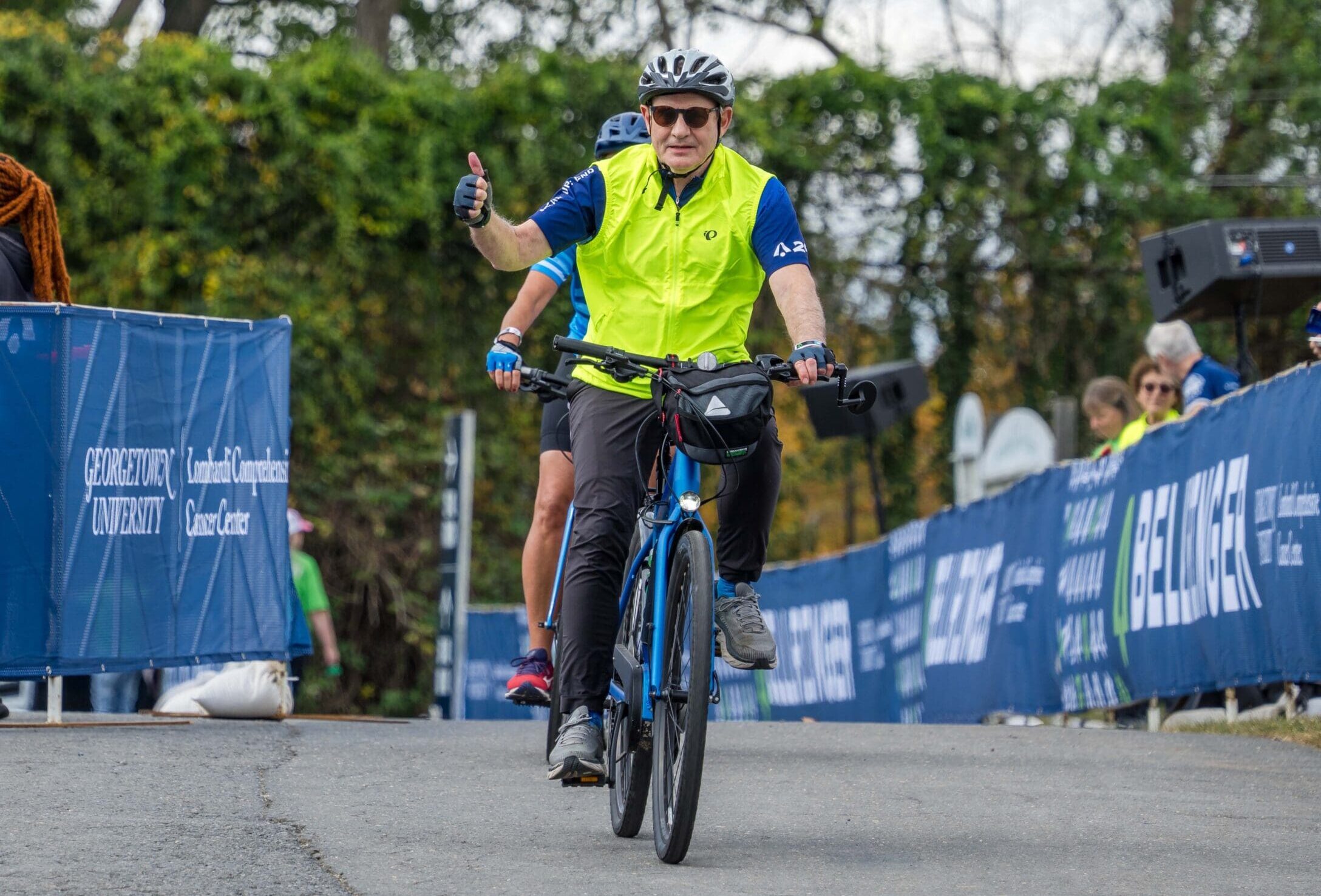
Dr. Atkin's crossing the finish line during BellRinger 2024!
As he continued to advance clinical research at Beth Israel Deaconess Medical Center within the Harvard system, he also began to feel the pull of something more. After four decades in Boston, he and his wife Susan, a pioneer in reproductive technology law, decided it was time for a change. With deep family roots in the Mid-Atlantic, they moved to Washington, D.C., where Dr. Atkins joined Georgetown University as Deputy Director of its NCI-designated cancer center, Georgetown Lombardi.
Georgetown offered more than a new role; it offered a new challenge. At Lombardi, he could not only continue leading research in melanoma and kidney cancer, but also help shape a new generation of translational researchers across disease areas. As an instrumental part of BellRinger’s founding, he helped build what had long been missing from his work: a way to directly connect his research to the community—a space where patients, families, clinicians, and scientists could stand together in pursuit of something greater.
He had seen the power of that kind of effort in Boston. The Pan-Mass Challenge had grown into one of the nation’s most successful philanthropic events for cancer research, and he knew the Washington D.C. region was ripe for something new and bold. With better weather, a robust cycling community, and a diverse and vibrant population, Dr. Atkins believed BellRinger had the potential to be more than a fundraiser. It could be a cultural touchstone, one that raises awareness about the value of research-driven care and the critical role of NCI-designated cancer centers in delivering tomorrow’s treatments today.
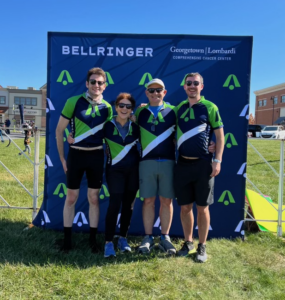
For Dr. Atkins, BellRinger’s meaning is perhaps most powerfully expressed through the team he captains: Team Immunotherapy. It’s a group unlike any other, consisting not just of colleagues, friends or family, but of patients—people who once faced incurable disease and are now riding beside him, off treatment, free of cancer, and living full, active lives.
Each Rider is a testament to what’s possible. He knows their stories intimately. The decisions, the setbacks, the narrow windows of opportunity that opened just wide enough to let in a new chance. These are not cases or charts—they are people who defied odds, embraced life, and returned not only to who they were, but to something more: a new version of themselves informed by resilience.
They are, as he often says, not just survivors, but thrivers.
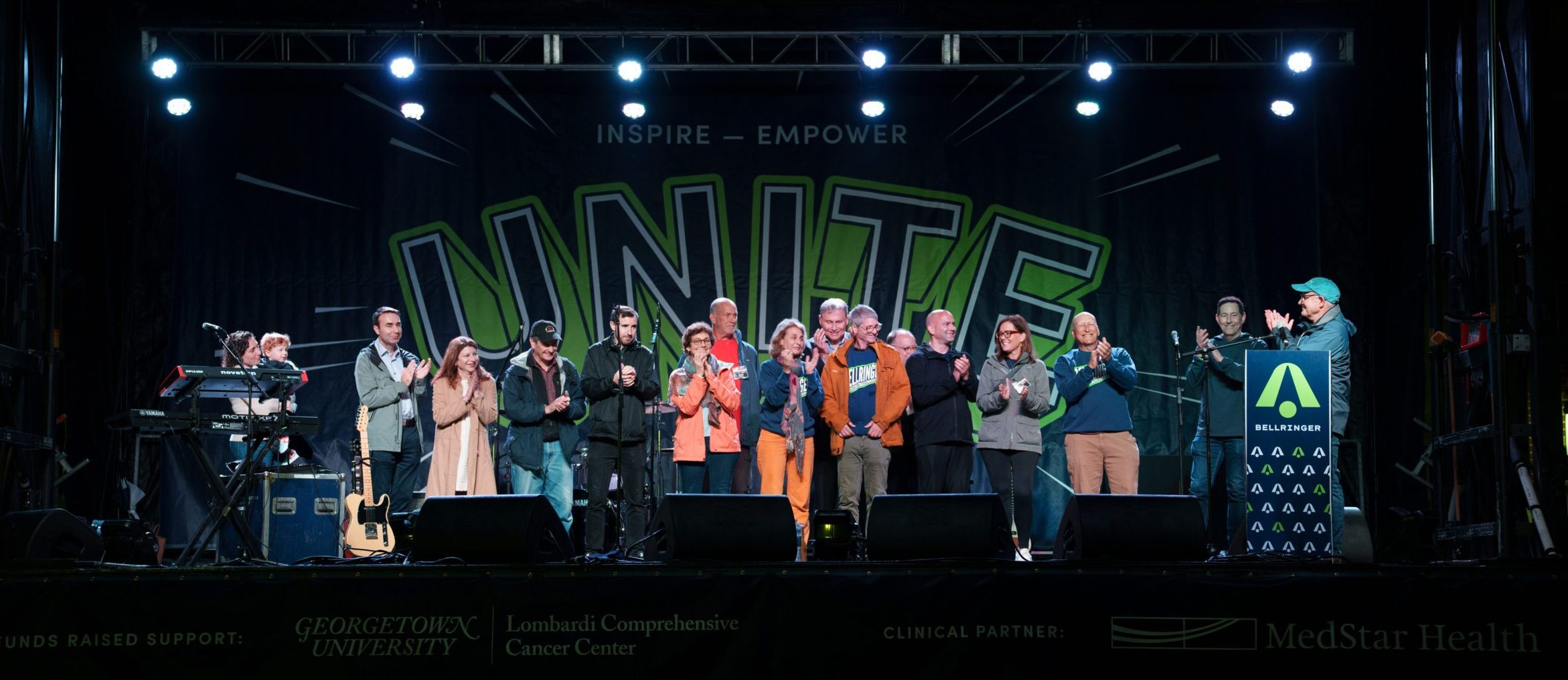
Dr. Atkins and members of Team Immunotherapy on Stage during BellRinger 2023's Opening Ceremony program
BellRinger is their collective celebration. A physical, visible, tangible demonstration of what research can do. For Dr. Atkins, riding with them each year is an emotional experience. It’s a full-circle moment for a career that began with the hope that science and human connection could be enough to change lives. Now, he sees it in motion—literally—along the miles of BellRinger’s course each fall.
Beyond the emotional rewards, Dr. Atkins understands the practical importance of community-led research funding. Research, especially at its earliest and most innovative stages, often goes unfunded by traditional grants. Philanthropic support fills that gap, enabling pilot projects, new equipment, and the recruitment of junior investigators whose bold ideas may shape the next chapter of cancer care.
Looking ahead, Dr. Atkins sees a future where BellRinger becomes as embedded in this community as Pan-Mass is in New England. A yearly tradition. A celebration of science. A collective act of hope. And as Lombardi’s work grows, so too will the impact of those who support it.
Dr. Atkins didn’t set out to build a movement, but along the way, he helped reshape the field of oncology, transform outcomes for thousands of patients, and create a community bound by research, recovery, and resilience. Because for him, the ultimate measure of success isn’t a published paper or a funding milestone. It’s the sight of his patients on bikes, riding beside him, being not just survivors—but thrivers.